Posts

Music & Family

Image
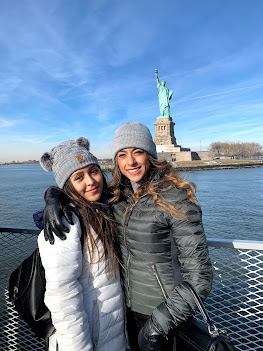
Hey guys! I decided to interview my aunt Angie for this blog. She currently lives in Colombia and when I used to live in Colombia we were very close. Now that we are far away it has been a bit more difficult to maintain communication but we make it work. She usually comes to visit us in December or in the summer and that's how I get to see her again.  Here is one my favorite photos with her Now let's get to the interview  Me: Hey Tía, how have you been? Angie: Good, working a lot but everything is going well.  Me: I am glad to hear that! Thank you for taking the time to help me with this, I really appreciate it.         Let's start with the interview, are you ready?  Angie: Yess, let's start! Me: First question. What is your name and where are you from? Tell me a little about yourself.  Angie:  My name is Angie Paola Sierra Avila and I am from Colombia. I live in Bogotá, the capital city of Colombia and I am a Journalis...

Salsa

Image
History and Origins  Salsa is a hybrid musical genre based on Afro-Cuban music that also incorporates different elements from various Latin American Styles. It started developing in New York City during the 1940s and 1950s but it was not until the 1960s that this genre of music received its official name. In the 1970s this genre became more popular along with the spread of Hispanic Cultural Identity. The word “Salsa” means “sauce” in English and is usually a mixture of ingredients made to flavor the food, which in some type of way has similarities to this musical genre, since this genre is a mixture of different elements. This genre of music is strongly influenced by Cuban Culture and also incorporates a lot of elements from Puerto Rican Culture. At the same time Jazz and Rock also played an important role in the creation of this unique genre. This genre has a lot of diversity because styles such as: Bolero, Rhumba, Mambo, Cha-Cha-Cha composed and contributed to what today we know ...

Music & Gender

Image
  It is no secret that in the past, men were usually in charge of playing the music and women were in charge of the dances and keeping them company. This is something that we can see in most cultures, which is really interesting because even though we are so different, we speak different languages and have different traditions; this dynamic of gender and music is present in a lot of cultures.  This is also something we can see in the Colombian culture, in which if we look back years ago, we can see how the musical groups were mostly composed of men. Today, I’m going to talk about a specific genre of music that is really popular in the Colombian Caribbean and in which we can still see how the majority of people who are part of this musical genre are men. This genre is called Vallenato and if I’m honest this is one of my favorite musical genres of my country. I love that the music in this genre is very cheerful, transmits a lot of feelings and is very traditional.  Below I’...

Music & Rituals

Image
As a person who was born and raised in Colombia, whenever I have the opportunity to share a little about my culture I choose to do so. That is why I have decided to make this blog about rituals that take place in Colombia and the music that is used to accompany those rituals.  First of all let me tell you a little bit about Colombia.  Colombia is a country located in South America where the main language is Spanish. The  capital of Colombia is Bogota, where a large part of the population is located. However, in the interior cordilleras you can find indigenous groups that still survive and continue to struggle to maintain their roots, their culture and their traditions. Colombia's  population is mostly mestizo but European and African minorities can also be found. Which makes Colombia a very diverse country with a lot of musical and cultural diversity as well.  Based on this ethnic diversity, in Colombia there are many rituals that come from different ethnic grou...